
The amount of digital data generated every day is staggering. Smartphones, laptops, and cloud platforms can generate huge quantities of data. Investigators’ challenge isn’t finding information, but rather identifying the appropriate evidence quickly and accurately. The challenge is identifying the appropriate evidence quickly and accurately.
Modern investigations require tools that are capable of processing large quantities of information without compromising reliability or the accuracy of forensics. Teams must be equipped to manage increasingly complex investigation requirements as the digital environment keeps to evolve. Modern digital forensics platforms are essential for police departments as well as military units, intelligence agencies, as well as security teams of corporations around the globe.
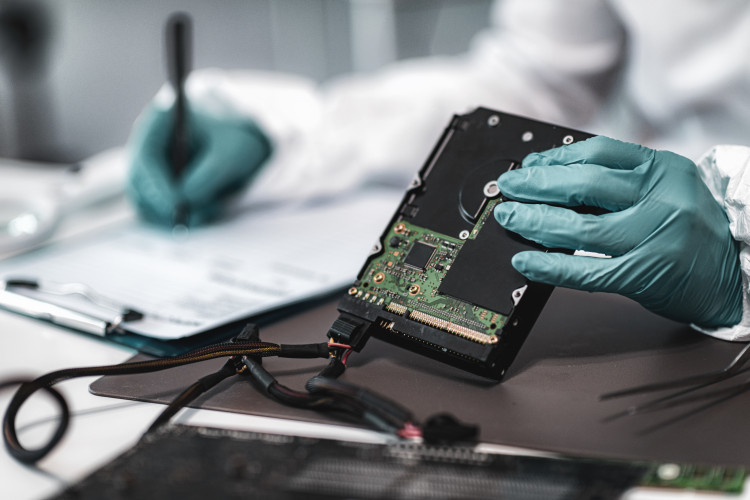
The Growing Need for Speed in Investigations
In most investigations, the timing issue is crucial. In the case of delays in collecting data, analyzing, or reporting evidence can result in slower decision-making. This raises the risk of operational failure.
Traditional forensic procedures typically involve long acquisition times and manual review processes and unconnected systems that result in inefficiencies throughout the investigation lifecycle.
Modern investigators require solutions that are able to quickly gather evidence from a variety of types of devices while maintaining the highest level of security and precision. An easier acquisition process enables teams to begin their analysis earlier, which can help investigators to discover useful information at the most crucial moments. Detego Global’s Unified Digital Forensics was created specifically to tackle these challenges. It can speed up each stage of an investigation, from gathering evidence to making reports.
Digital Evidence is not limited to Computers
In the past investigations were focused on computers for desktops and server. Nowadays, evidence is available virtually everywhere. Mobile devices contain messages, call records, photographs video, location information and activity on applications. Smart devices generate usage logs. Drones record images and other data. Cloud-based applications can save documents as well as conversations. Even removable media and IoT devices can be a repository for important evidence.
Computer forensics today requires a much broad approach to data collection and analysis than what is achievable with traditional methods. Investigators need platforms capable of collecting and analyzing data from thousands of applications and types of devices without requiring a variety of disconnected tools. Unified solutions reduce complications while enhancing efficiency.
Artificial Intelligence is Transforming Investigations
The manual analysis of the huge amount of digital data available in current cases is becoming increasingly difficult. Artificial intelligence is revolutionizing the way investigators approach evidence by assisting detect patterns, connections, and critical information much faster than traditional methods by themselves.
AI-powered analytics are able to assist in facial recognition images, image classification, semantic search, transcription or translation, optical character recognition detection of objects, and link analysis. These tools help investigators concentrate on pertinent evidence, while spending less time reviewing irrelevant data.
For companies that handle large-scale investigations AI-driven Digital forensics solutions provide a significant advantages, as they improve both speed and precision.
Modern Security Operations and the significance of DFIR
Cyberattacks have increased in both sophistication and frequency across every industry. Today, organizations are faced with ransomware attack such as insider threats and data breaches, theft of credentials as well as financial fraud and advanced persistent threats. To effectively respond it is essential to have a planned procedure for identifying threats that are causing problems, containing them, and conducting an investigation and resolving the situation. DFIR, or Digital Forensics and Incident Response, plays a vital role.
DFIR teams must gather evidence, detect strategies for attack, analyze the extent of damage and assist in recovering efforts in a manner that is consistent with appropriate documentation and chain of custody procedures. A reliable tool that can organize evidence and workflows across the entire investigation is crucial for efficient DFIR operations. A central platform allows investigators to stay consistent and ensure that crucial information is accessible throughout the entire response.
Make investigations easier to manage through one platform
One of the major challenges most organizations face is the necessity of using numerous tools that aren’t connected. Evidence may be stored in a single system, case notes in another system, reporting tools elsewhere, and even investigative workflows handled in different ways. This dispersion often causes problems and increases the probability of errors.
Unified platforms for investigation address this problem. They integrate acquisition, analytics evidence management, workflow management into one environment. Detego lets investigators handle cases with greater efficiency while maintaining visibility at every stage of the investigation. Centralized management enhances collaboration, enhances accountability, and simplifies compliance requirements.
Assisting lab and field investigations
Not all investigations take place in a forensic laboratory. In many cases, evidence must be collected in the field. This can include airports, police station, border crossings and other remote locations. Frontline personnel require equipment that can perform forensic tasks yet are simple to deploy.
Modern forensic tools support lab-based as well as field-based operations. Tools that are portable allow investigators do triage, locate relevant evidence and take rapid, informed decisions. This flexibility enhances operational readiness and makes sure investigations continue no matter the location.
Cyber Security And Digital Forensics Have Never been more connected
Cybersecurity and digital investigations become increasingly crucial as digital threats continue to evolve.
Digital Forensics is an area that concentrates on the analysis of crimes and offers investigative tools that help to determine the circumstances that led to the incident. Together, these disciplines will help organizations improve resilience to threats, improve detection of threats and react to new risks. Digital evidence gathering, analysis, and action are now essential elements of modern security processes.
Future of Investigations Will Be Faster and Smarter.
Digital investigations continue to grow in complexity as new devices, technologies and communication platforms are developed. Organisations must have solutions that can keep pace with this changing landscape while also providing efficiency, speed and accuracy. efficiency.
Modern platforms convert huge amounts of information into actionable intelligence by combining advanced Digital Forensics tools, AI-powered analysis, streamlined DFIR processes, extensive tools for computer forensics, as well as integrated cyber security.
Unified Forensic solutions are gaining importance as the demand for dependable and rapid investigations grows. They help businesses protect their most valuable assets, and quickly respond to the most recent cyber-attacks.